Wingpanels
The insect wings on the tail
Overview
One of the most identifying physical attributes of a vulpeco is the set of wingpanels that adorn their long, narrow tails and make up the majority of the ear structure. These traits are defined by their Aspect type - which is the insect tied to a vulpeco’s DNA.
It is incredibly difficult to change the vulpeco’s aspect type, though it is not impossible under rare circumstances
The insects available for a Vulpeco's Aspect are determined by its Morph. At the most basic level, only living, non-extinct butterflies and moths may be selected.
A Vulpeco's Aspect determines both the coloration and shape of its wingpanels. These traits should remain consistent with the chosen insect.
For example, a Vulpeco with a Monarch Butterfly Aspect should display Monarch-inspired wingpanel shapes and patterns, and should not have Luna Moth wingpanel shapes (such as adding tendrils).
Exceptions occur through circumstances such as oddities which may permit tassels and tendrils on wingpanels which normally would not possess them.
Shapes
One of the most identifying physical attributes of a vulpeco is the set of wingpanels that adorn their long, narrow tails. Each side of their tail has a fore and hind wing panel - two separate pieces that connect directly to the appendage, bringing it to a total of 4 individual panels.
On the head, the ears also share the butterfly-wing appearance - but instead of being truly separated pieces (i.e. the fore and hind wings) they are a solid, connected piece of tissue.
They are shaped to still give the appearance of a true butterfly wing, and most commonly nearly perfectly match the tail wing panels. Subtle variations between the two are acceptable.
Coloration and Patterns
Coloration is fairly easy to understand, as there are limitless possibilities.
Vulpecos do not have any rarity limitations on coloration and patterns for wingpanels SO LONG AS they are similar to those found on the insect chosen on their ID. This insect is determined in major part by the origin of the Vulpeco.
Antennae
Antennae are entirely optional to have. They are free and do not take any slots.
Butterfly-like
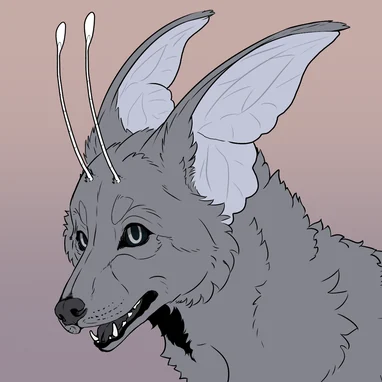
There are many various antennae types, but all butterfly-like antennae will have a little bobble at the end.
Moth-like
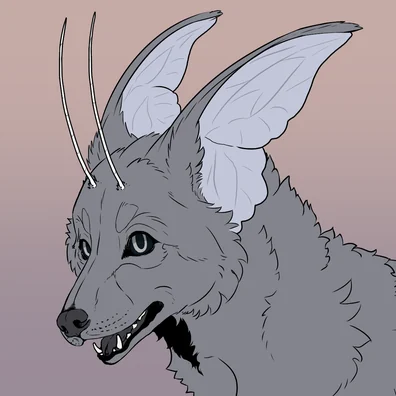
The moth-like antennae will taper towards the end, unlike the butterfly versions. They may have fuzzy features or individual ‘spines’ like some moths have.
Notes
The tail panels are used as a method of communication between vulpeco. They can be stood nearly completely upright or naturally rest downward - this flexibility is used for many signs and signals.
When the tail is shaken the panels produce a unique ‘hissing’ sound as the scales of the wingpanels run against each other. This may be used in signals like warning of danger nearby or telling another vulpeco they’re too close!